Review: The Splintered Sun
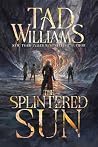 The Splintered Sun by Tad Williams
My rating: 3 of 5 stars
🪶 🗡️ 🌙
3.25 ★
There is a lot to appreciate in *The Splintered Sun*, but I finished it feeling more disappointed by what it could have been than satisfied with what it actually gave me.
The premise was what initially drew me in, and the LGBT tag made me even more curious. I'd heard so many good things about Tad Williams beforehand, and I can absolutely understand why he's so highly regarded. His writing feels experienced and intentional, and he has a way of building scenes that draws me in and lets me visualise the world he's created. Unfortunately, beautiful writing and an immersive world don't necessarily make for an equally immersive reading experience.
From the very beginning, I was thrown into Hernystir without much of a reference point. I'm used to fantasy books that require some patience while you find your footing, but here I found myself more confused than usual. The world genuinely interested me; I just wanted more clarity about its geography, its different regions and how everything fit together. At times, the writing felt as though I was expected to already know things that, as someone new to Osten Ard, I simply didn't. Even the measurement system added unnecessary friction, making distances and sizes harder to grasp than they needed to be.
The sheer number of characters also made it difficult to keep track of everyone, particularly when it came to the various antagonists and their motivations. I enjoy a large cast, but I need a clearer sense of who matters, what is at stake and where the story is taking me. There were stretches where I struggled to find that direction, and the pacing didn't help. At one point, I genuinely considered putting the book down, setting myself a deadline to decide whether to continue. Thankfully, Vedra and Daley kept me curious enough to carry on.
Their relationship was easily one of my favourite aspects of the book. The found-family dynamic, the care they show each other and the way they grow together gave me something tangible to invest in. I also appreciated the natural handling of Flann Alderwood's sexuality. His identity isn't treated as his defining characteristic, and a particularly thoughtful scene about acceptance was a welcome addition. I would have happily spent more time with him and his romantic relationship, too.
The supernatural elements also caught my interest, especially the Schything, the Dream Road and Vedra's developing abilities. I wanted to know more about how they worked and what they might mean, and I would have loved to see these ideas explored more deeply.
This isn't a bad book, and I don't regret finishing it. Williams's writing is strong, there are memorable character moments, and the story has plenty of intriguing ideas. But for me, the worldbuilding lacked the clarity I needed, the narrative felt unfocused at times, and too much of the book's potential went unexplored. Perhaps readers already familiar with Osten Ard will get more out of it than I did. As a newcomer, though, I struggled to connect with the larger story despite the parts I genuinely enjoyed.
I'm glad I gave it a chance, but I'm not yet sure whether I'll continue the series. I'll let this one sit with me for a while.
View all my reviews


Comments
Post a Comment